Deep technical expertise, end to end
Five practice areas, each led by senior specialists, cover infrastructure, cloud, data and AI so your modernization program has one accountable partner.
Enterprise Infrastructure
Modern compute, network and storage foundations, from the data center up.
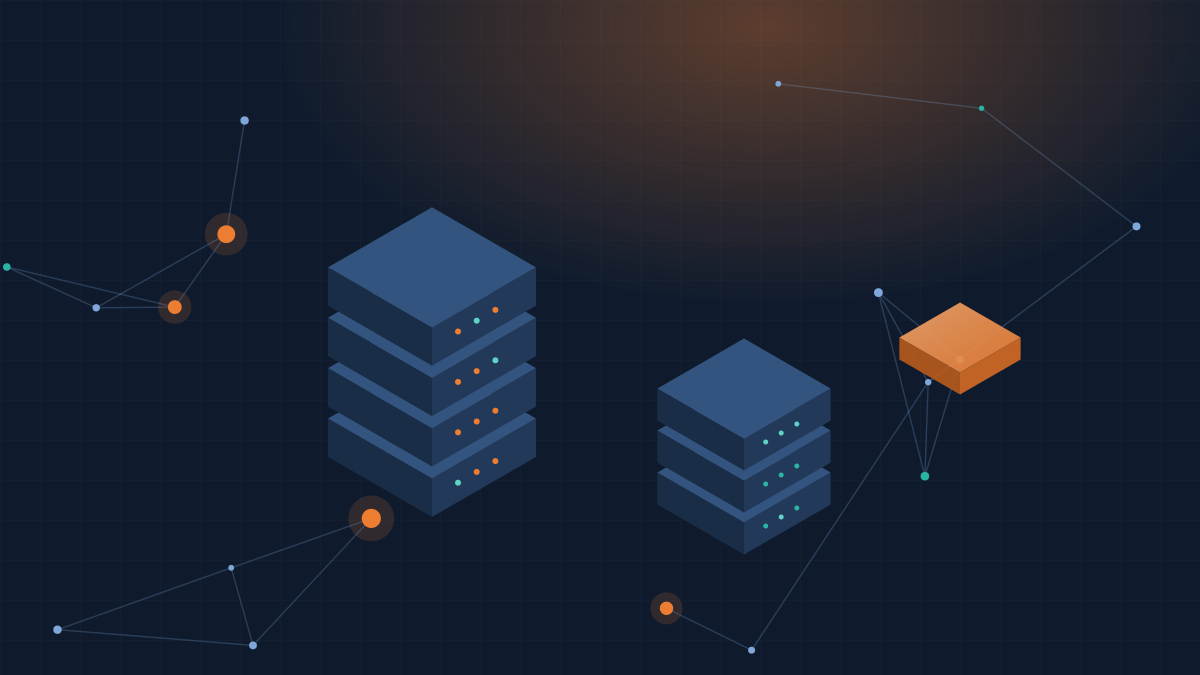
Most infrastructure grows one urgent project at a time. The result is often an estate that works but costs too much, is hard to change, and depends on knowledge held by a few people. We assess what you have, decide what to keep, and modernize the rest in planned steps, so you avoid a risky big-bang cut-over.
Compute modernization
Right-size and refresh server fleets, consolidate under-used hosts, and standardize builds with automation so new capacity is ready in hours, not weeks.
Network modernization
Segmentation, software-defined networking, resilient WAN/SD-WAN design and zero-trust access patterns that keep pace with hybrid workloads.
Storage modernization
Tiered storage design across flash, hybrid and object storage, with clear performance tiers, snapshot policies and capacity forecasting.
Containerization
Package applications into containers with secure base images, build pipelines and registries, starting with the services that benefit most.
Container orchestration
Production Kubernetes (upstream, OpenShift, Rancher, or managed AKS/EKS/OKE/GKE) with ingress, observability, policy and GitOps delivery.
Virtualization & VMware exit
Plan and carry out moves from VMware to Linux KVM, including Oracle Linux KVM with Oracle Linux Virtualization Manager, Proxmox VE, or OpenShift Virtualization.
Faced with a large rise in hypervisor renewal costs, a client runs a wave-based move of 300+ VMs to Oracle Linux KVM. Templates, network mappings and backup integration are proven on a pilot cluster first, then each wave is converted with automated tooling and validated against agreed checks.
What you get
- Infrastructure assessment and total-cost-of-ownership model
- Reference architectures and standard builds
- Automation with Ansible and Terraform
- Wave-based migration runbooks with rollback plans
- Day-two operations handover and documentation
Public Cloud
Migrate, refactor and run workloads on AWS, Microsoft Azure, Oracle Cloud and Google Cloud.
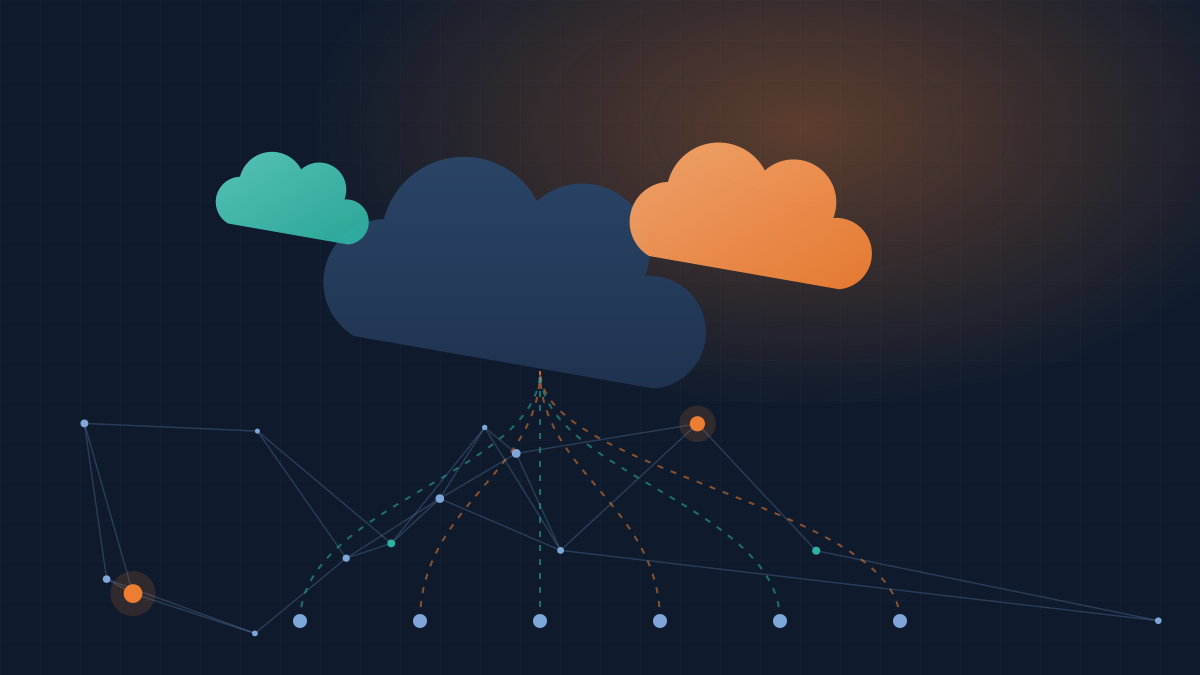
Moving to the cloud should make you faster and cut costs, not just move the data-center bill somewhere else. We place each workload on the right path: rehost, replatform, refactor, replace or retire. We build a secure landing zone first, then migrate in waves with clear success criteria.
Portfolio assessment
Application and dependency discovery, the '6R' decision for every workload, and a sequenced migration roadmap with business-case figures.
Landing zones
Account/subscription structure, identity, networking, guardrails, logging and tagging standards built as code before any workload arrives.
Workload migration
Rehost and replatform waves using native migration services, with cut-over rehearsals, data sync and validated rollback.
Application refactoring
Break up monoliths step by step, adopt managed databases, containers and serverless where they clearly cut cost or effort.
FinOps & cost optimization
Right-sizing, commitment planning, storage lifecycle and showback dashboards so cloud spend stays tied to value.
Cloud security posture
Baseline policies, encryption, key management, posture monitoring and audit logging aligned to your compliance frameworks.
An order-processing application is rehosted first to exit a data center on time, then refactored over two quarters: its database moves to a managed service, batch jobs become event-driven functions, and the web tier runs on autoscaling containers.
What you get
- Multi-cloud and cloud-to-cloud migration
- Infrastructure as code for repeatable environments
- Managed database adoption
- Performance and cost baselines before and after
- Runbooks, training and handover
Hybrid Cloud
One operating model across data center, edge and multiple clouds.
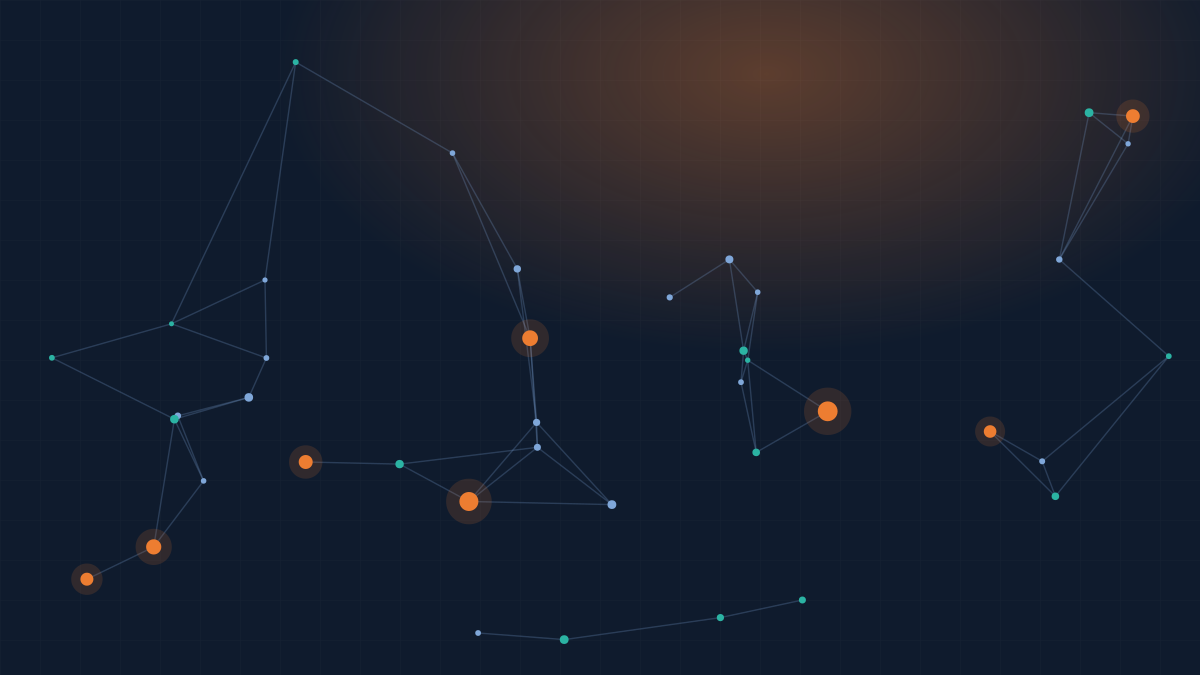
For most organizations the answer is not 'all cloud' or 'no cloud' but a deliberate mix. Data residency, latency, licensing and existing investments all play a part. We design hybrid platforms that can be managed, secured and automated as one, so workloads can run where they fit best and move when business needs change.
Connectivity & networking
Private interconnects, VPN and SD-WAN, hybrid DNS and consistent segmentation between on-premises sites and cloud regions.
Unified identity
Single sign-on, conditional access and privileged access management that work the same everywhere.
Consistent platforms
Kubernetes and virtualization platforms that span on-premises and cloud, such as Azure Arc, AWS Outposts or OCI Dedicated Region patterns, chosen to fit your needs.
Policy & governance
Central tagging, policy-as-code, configuration baselines and compliance reporting across every environment.
Unified observability
One view of metrics, logs and traces from data center to cloud, with alerting tied to service-level objectives.
Workload placement & bursting
Placement guidance, cloud bursting for peak periods, and cloud-based DR for on-premises systems.
A regulated client keeps its core transactional databases on-premises for residency reasons, while de-identified data is copied to the cloud each night for elastic analytics. Both sides share one identity, network and monitoring plane.
What you get
- Hybrid reference architecture
- Interconnect and network design
- Identity federation
- Policy-as-code guardrails
- Single-pane observability
Database Engineering
Database platforms, data integration, lakes, warehouses and visualization, plus Oracle license optimization.
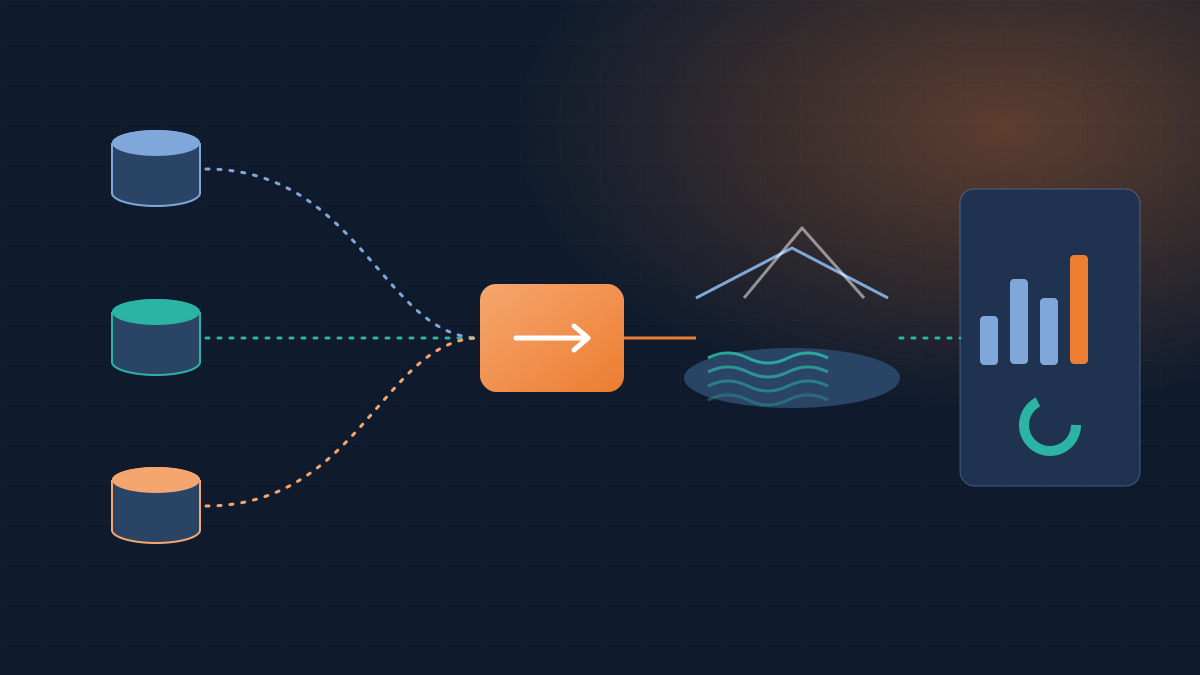
Data is often your most valuable asset and your most fragmented one. Our database engineers build and run the platforms behind core systems, connect data across them, and turn it into reporting the business trusts. We are vendor-neutral and work across Oracle, Microsoft SQL Server, PostgreSQL, MySQL and modern cloud data platforms.
Traditional data platforms
Design, build and harden Oracle, SQL Server, PostgreSQL and MySQL platforms with high availability (RAC, Data Guard, Always On, Patroni, InnoDB Cluster).
Data lifecycle management
Classification, retention, archiving and purge policies, partitioning and tiering that keep databases lean and compliant.
Data integration
Batch ETL/ELT and change-data-capture pipelines using tools such as Qlik Replicate, Oracle GoldenGate, Azure Data Factory, Informatica and Debezium.
Data lake & warehousing
Lakehouse and warehouse design on Snowflake, Databricks, Azure Synapse/Fabric, Amazon Redshift or BigQuery, with layered models and governance.
Data visualization
Semantic models and dashboards in Power BI, Tableau or Qlik Sense, with row-level security and certified datasets.
Oracle license optimization
Feature and pack usage review, Enterprise vs Standard Edition fit, consolidation, and hard-partitioning strategies that lower ongoing support costs.
We migrate between engines in any direction: Oracle to SQL Server, Oracle to PostgreSQL, MySQL to Oracle, SQL Server to PostgreSQL. Each move follows a proven path: assess code complexity, convert schema and logic, sync data with CDC, run parallel validation, then cut over with a tested rollback plan.
What you get
- Oracle → SQL Server / PostgreSQL / MySQL
- MySQL → Oracle, SQL Server → PostgreSQL, and more
- Performance tuning and capacity planning
- Database security, auditing and encryption
- Upgrade and patch programs
AI Platform Engineering
Secure, production-grade AI infrastructure on-premises, in the cloud, or both.
Successful AI depends less on picking a model and more on the platform underneath it: GPU capacity, data pipelines, experiment tracking, deployment, monitoring and, above all, protecting enterprise data. We engineer that platform so data scientists can move from notebook to production quickly and safely.
AI infrastructure setup
GPU cluster design and sizing on-premises, in the cloud or hybrid, including Kubernetes GPU scheduling, high-speed storage and networking.
Data & feature pipelines
Reliable ingestion, feature engineering and feature stores on Databricks, Snowflake or open-source stacks, with lineage and data quality checks.
MLOps pipelines
CI/CD for models with MLflow or Kubeflow: experiment tracking, model registry, automated testing, approval gates and repeatable deployment.
GenAI & retrieval platforms
Private LLM hosting and managed model services, vector search and retrieval-augmented generation (RAG) grounded in your own content.
Enterprise AI data security
Data classification, masking, private networking, key management, role-based access and audit trails so sensitive data never leaks through AI workflows.
Model monitoring & governance
Drift, accuracy and cost monitoring, explainability reports and a governance framework aligned to emerging AI regulations.
A sales-forecasting pilot built in a single notebook is turned into a governed platform: data lands in a lakehouse, features are versioned, an XGBoost model is retrained on a schedule and promoted through a registry, and predictions reach planners' dashboards each morning.
What you get
- AI readiness and use-case prioritization
- Reference architectures for on-prem, cloud and hybrid AI
- Secure data access patterns for AI
- MLOps tooling and automation
- Responsible-AI and governance guardrails
Let's talk about what's next
Tell us where you want to be. We'll set out a practical path to get there, with no obligation.